Choosing a camera lens can feel confusing when you are faced with different sizes, focal lengths and features. But the right lens can make a noticeable difference to the photos you take. Whether you enjoy portraits, landscapes, travel photography or close-up shots, understanding the basics will help you choose a lens that suits your style.
This lens camera guide explains common lens types, what they are used for and the key points to consider before buying. You do not need the most expensive lens to get better results. You need one that works well with your camera and the kind of photography you enjoy.
Why the Right Lens Matters
A camera body records the image, but the lens has a major influence on how the scene looks. It affects the field of view, background blur, perspective and how much light reaches the camera. Changing lenses can help you create very different photographs even when you use the same camera body.
For example, a wide-angle lens can fit more of a landscape into the frame, while a telephoto lens helps you photograph distant subjects. A fast prime lens can be useful for portraits in softer light, and a macro lens lets you capture small details.
Common Lens Camera Types
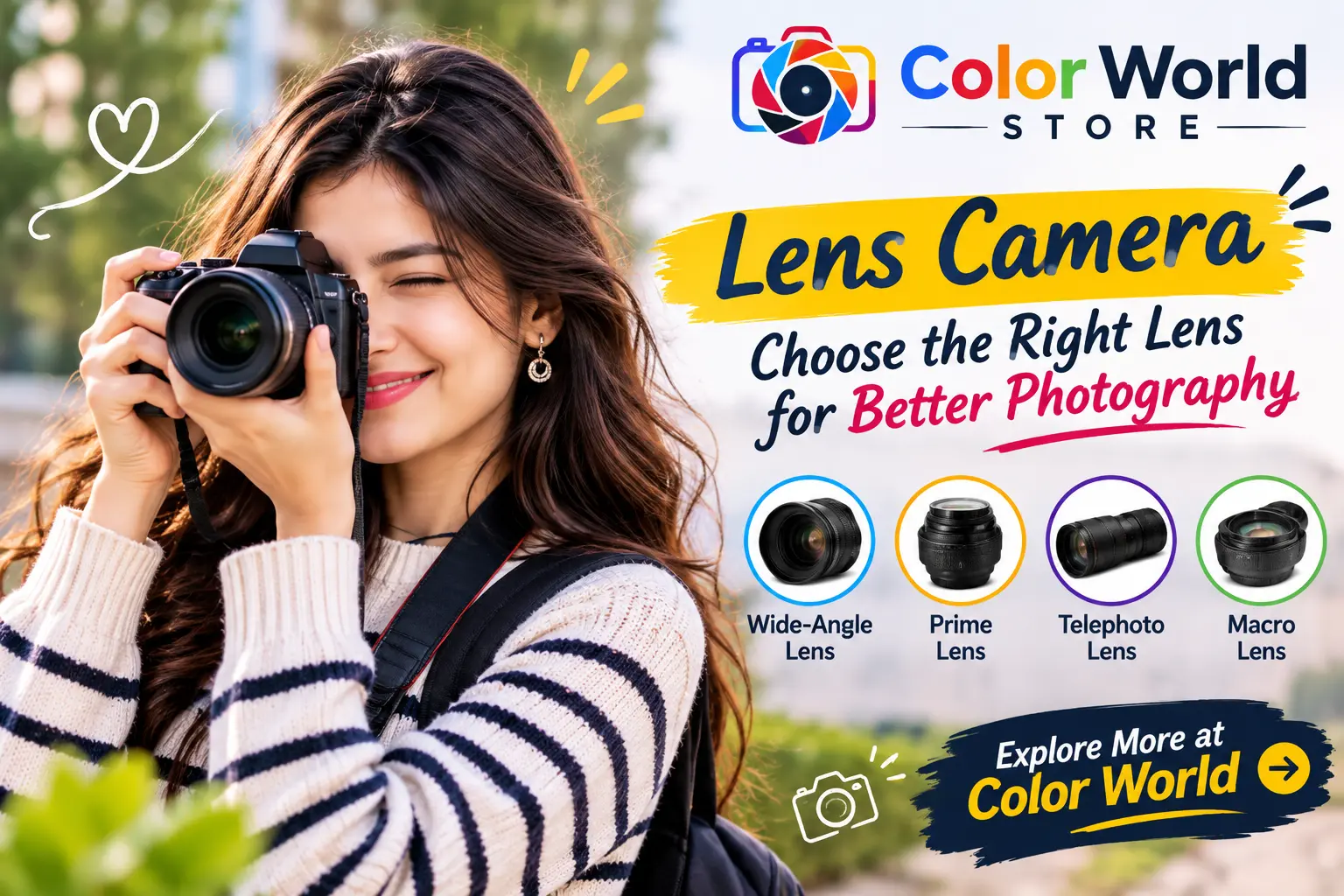
1. Wide-Angle Lens
A wide-angle lens captures a broad view of a scene. It is useful for landscapes, architecture, interiors and travel photography, especially when you want to include more of the surroundings. Very wide lenses can make objects near the camera appear larger, so pay attention to composition.
2. Prime Lens
A prime lens has a fixed focal length, which means it does not zoom. Many photographers like prime lenses for their sharp results, simple design and ability to create a softly blurred background. A 35mm or 50mm prime is a popular choice for everyday photography, street scenes and portraits.
3. Telephoto Lens
A telephoto lens brings distant subjects closer in the frame. It is often used for wildlife, sports, events and portrait photography. Check the focal-length range, weight and image-stabilisation features before choosing one, particularly if you plan to shoot handheld.
4. Macro Lens
A macro lens is designed for close-up photography. It helps reveal details in flowers, insects, jewellery, textures and small products. Look at the lens’s magnification capability and minimum focusing distance if close-up work is your main interest.
How to Choose the Right Lens for Your Camera
Start by thinking about what you photograph most often. A landscape photographer may benefit from a wide-angle lens, while someone who photographs birds or sports may need a telephoto lens. For portraits, a prime lens or a short telephoto lens can be a good option.
- Check compatibility: Make sure the lens mount matches your camera body. Also check whether the lens is designed for your camera’s sensor format.
- Understand focal length: A shorter focal length gives a wider view, while a longer focal length gives a narrower view and brings distant subjects closer.
- Consider aperture: A wider maximum aperture, represented by a smaller f-number, can help in low light and create a shallower depth of field.
- Think about stabilisation: Optical or in-body stabilisation can help reduce blur caused by camera shake, especially when using longer focal lengths.
- Balance budget and weight: Choose a lens you can comfortably carry and use. A practical lens that suits your needs is often more valuable than an expensive lens you rarely take out.
Lens Camera Mistakes to Avoid
Do not buy a lens only because it has the biggest zoom range or the lowest f-number. Check real-world use, compatibility and the kind of images you want to create. Avoid overlooking weight, filter size, focusing performance and whether the lens has stabilisation. If possible, handle the lens before making your decision.
Explore Camera and Photography Gear at Color World
The right lens is part of a complete photography setup. Your camera body, lens, lighting and accessories all work together. If you are planning your next photography upgrade, explore the range at Color World Store and compare equipment according to your photography needs.
For another useful reference when comparing lens types and focal lengths, read Canon’s lens buying guide.
Practical Tips for Better Results
- Keep the front and rear lens elements clean using suitable lens-cleaning equipment.
- Use a lens hood when appropriate to help reduce stray light and protect the front element.
- Try different focal lengths and shooting distances to learn how they change your composition.
- Use a suitable shutter speed and stabilisation to reduce camera shake.
- Store lenses in a dry, protected bag and use caps when they are not attached to the camera.
Frequently Asked Questions
Which lens is best for beginners?
A standard zoom lens is a flexible starting point because it covers a useful range of focal lengths. A 35mm or 50mm prime lens can also be a good choice if you want to learn composition with a fixed field of view.
What is the difference between a prime lens and a zoom lens?
A prime lens has one fixed focal length, while a zoom lens covers a range of focal lengths. Prime lenses can offer a wide maximum aperture, while zoom lenses provide framing flexibility without changing lenses.
Which lens is good for portrait photography?
A 50mm or 85mm prime lens is a popular portrait option, although the best choice depends on your camera sensor, working distance and preferred framing.
Can any lens fit any camera?
No. Lens mounts and sensor formats differ between camera systems. Always confirm that a lens is compatible with your specific camera body before buying.
What does aperture mean on a camera lens?
Aperture is the opening that controls how much light passes through the lens. It also affects depth of field. A smaller f-number indicates a wider maximum aperture.
AI Overview: How to Choose a Camera Lens
Choose a camera lens based on the subjects you photograph and the camera body you own. Wide-angle lenses suit landscapes and interiors, prime lenses are useful for portraits and everyday photography, telephoto lenses bring distant subjects closer, and macro lenses capture fine details. Before buying, check lens-mount compatibility, focal length, maximum aperture, stabilisation, weight and budget. The best lens is the one that supports your photography style and feels practical to use.
Final Thoughts
Understanding lens types makes it easier to choose equipment with confidence. Think about the photos you want to take, check compatibility with your camera and compare the features that matter for your style. With the right lens and regular practice, you can explore new creative possibilities and get more from your camera.